
Wood restoration can dramatically change a fence, barn, deck, or exterior wall, but wood is also easy to alter permanently. Abrasive blasting is neither automatically too aggressive nor a universal shortcut. Its suitability depends on the wood species, density and condition; the paint, stain, sealer, or weathering to be removed; the desired appearance; and the operator’s media and technique.
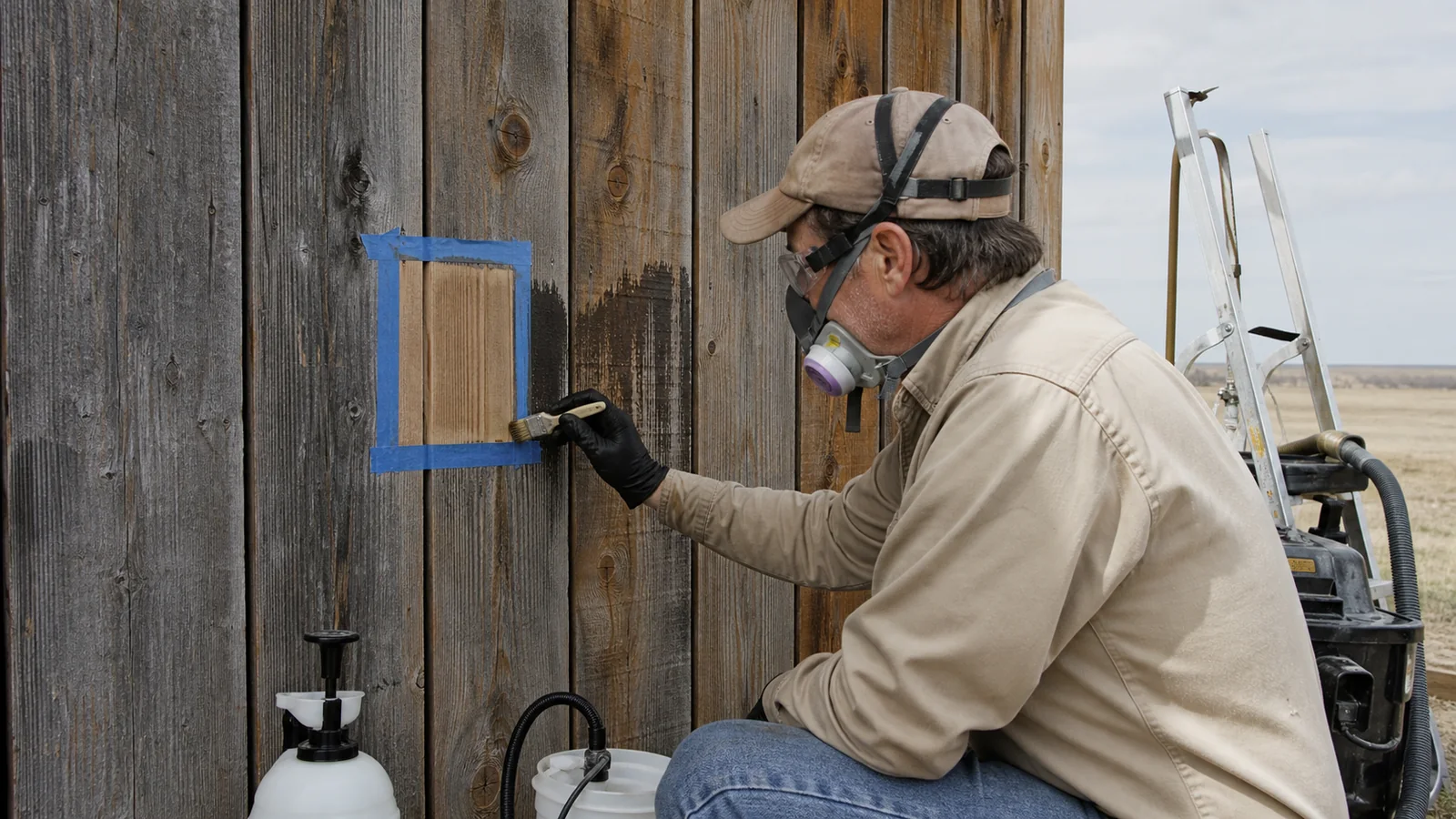
When those variables align, a controlled process can remove failed finishes and surface weathering from sound wood, including corners and profiles that are tedious to scrape. When they do not, blasting can raise grain, erode soft growth rings, round details, or leave stripes. A representative test patch—not a promise—should guide the decision.
Manases EcoBlast provides mobile surface preparation from Great Bend and Austin across Kansas, Oklahoma, and Texas. These planning steps explain what to expect when evaluating blasting for wood.
Why Weathered Wood Becomes Difficult to Restore
Exterior wood changes under sunlight, moisture, dirt, biological growth, smoke, and repeated finish cycles. Ultraviolet exposure breaks down the surface and contributes to graying. Water can support mildew or algae and move stains through the grain. Paint may peel while adjacent areas remain firmly bonded, and penetrating stain can weather unevenly rather than lifting as a continuous film.
Pressure washing can remove loose dirt and growth on some sound surfaces, but excess pressure or poor technique can also leave wand marks, drive water into joints, and create fuzzy fibers. It may not remove an old coating uniformly. Scraping and sanding provide different levels of control, yet become slow around knots, rails, grooves, and rough-sawn boards. Chemical strippers add compatibility, dwell-time, neutralization, and runoff questions.
The right method starts with the actual problem. Cleaning surface growth is not the same scope as stripping paint. Removing gray fibers for a semi-transparent stain is different from preparing siding for an opaque coating. More removal is not always better.
Where Controlled Blasting May Work Well
Potential candidates include structurally sound fences with failed stain, robust deck boards and railings, barn siding and beams, log walls, exterior siding, substantial wood doors, and durable outdoor furniture. Surface-dependent is the key qualification: two boards in the same fence can react differently because of species, moisture history, grain orientation, previous repairs, or decay.
Blasting is most useful when the wood has enough integrity to tolerate controlled removal and the goal is to expose a fresh, reasonably uniform surface for a compatible stain, sealer, primer, or paint. It can also create deliberate texture or custom etching, but a decorative result should first be approved on matching material.
Good candidates usually have:
- firm fibers without widespread rot, softness, or insect damage;
- a coating or weathered layer that responds predictably in a test;
- enough access for consistent nozzle angle and movement;
- an owner-approved texture and color range; and
- a finish plan ready for after the wood dries.
Blasting does not make deteriorated boards sound, flatten cupping, close checks, or produce a furniture-smooth finish. Repairs and selective replacement may be needed first.
When Another Method or Extra Controls Make More Sense
Punky, decayed, fire-damaged, or unusually soft wood can lose sound material before the unwanted finish releases. Thin veneers, carved details, delicate trim, sharp edges, and fine interior finishes may be better handled off-site or with scraping, sanding, chemical removal, or a combination. If a flawless smooth finish is required, expect careful sanding after any broader removal method.
Paint on an older structure requires particular caution. Color and age alone cannot confirm composition. The owner may need coating testing before disturbance, especially where lead or another regulated constituent could be present. Wet abrasive blasting reduces airborne dust compared with dry blasting, but it is not dust-free and does not make hazardous debris harmless. Results can include mist, chips, spent abrasive, and water that require an appropriate containment, worker-protection, cleanup, and disposal plan.
Nearby glass, soft masonry, roofing, vehicles, landscaping, electrical fixtures, hardware, and occupied areas also influence method selection. If these cannot be protected or the runoff cannot be managed, a different approach may be more practical.
How a Test Patch Guides the Process
A professional assessment records the species if known, board condition, moisture, coating type, exposure, and intended final finish. The operator then chooses a conservative starting combination of media, pressure, water flow when applicable, nozzle distance, angle, and travel speed. Media that is appropriate for heavy steel may be unsuitable for wood.
A small test should represent the project, including typical coating buildup and weathering—not merely the easiest board. It helps answer:
- Does the coating release before the substrate erodes?
- Is the resulting grain and texture acceptable?
- Are earlywood and latewood wearing at different rates?
- Will corners, fasteners, knots, and board edges need another method?
- Is the goal a light clean, full strip, or blended transition?
- Will light sanding be needed before finishing?
The owner should view the dry test area when possible because wet wood can temporarily appear darker and more uniform. Approval creates a visual reference, but settings may still require adjustment as conditions change across the structure. Consistent movement and overlap help limit dwell marks; no process can guarantee identical color among naturally varied boards.
What to Expect During a Wood Restoration Job
Before mobilization, define the work boundaries and identify rotten boards, loose fasteners, failed caulk, open joints, and planned repairs. Clarify whether hardware, lights, hinges, signs, or furniture will be removed or masked. Windows, doors, adjacent finishes, plants, soil, drains, and pedestrian routes may need protection.
A practical project checklist includes:
- Photograph wide views and the worst coating or weathering.
- Estimate square footage or linear feet and note access height.
- Identify known wood and finish products, if records exist.
- Agree on a representative test area and acceptance sample.
- Establish containment, runoff, cleanup, and weather limits.
- Coordinate repairs, drying, optional sanding, and finish application.
- Keep people, pets, vehicles, and other trades outside the work zone.
Production normally proceeds section by section so the operator can monitor the response and maintain a consistent pattern. Wet abrasive work can reduce airborne dust, but owners should still expect a controlled work zone and cleanup. After removal, inspect for decay or damage previously hidden by the coating. Blasting reveals these conditions; it does not repair them.
Drying and Choosing the Next Finish
Restored wood should not be coated simply because its surface looks dry. Moisture can remain inside boards and joints, and acceptable moisture content depends on the coating manufacturer’s instructions. Weather, shade, humidity, species, thickness, and how much water reached the assembly all affect drying. Use the product requirements and, where appropriate, moisture readings rather than a universal waiting period.
Semi-transparent stain can preserve natural character but will display color variation and preparation marks. Solid stain or paint provides more uniform color yet creates a maintenance film that may eventually peel. Clear products vary widely in ultraviolet protection and maintenance interval. Exterior exposure, foot traffic, water shedding, desired appearance, and the previous coating all matter.
Before finishing, remove residual dust, complete approved sanding, and follow the coating maker’s preparation and application directions. Do not leave newly prepared wood exposed longer than necessary: sunlight and moisture begin weathering it again. Also avoid expecting one heavy coat to conceal decay or severe inconsistency. Repair soft boards and use a product designed for the exposure.
Frequently Asked Questions
Can abrasive blasting restore every deck or fence?
No. Sound, substantial wood with a removable finish may be suitable, while soft, rotten, thin, or highly detailed material may not be. A site review and test patch are the best basis for a recommendation.
Will blasting leave wood smooth enough to stain?
It depends on the species, coating, settings, and finish goal. Blasting may emphasize grain or leave fibers that require light sanding. Approve the test texture with the intended stain or coating in mind.
Is wet abrasive blasting dust-free?
No. Water reduces airborne dust relative to dry blasting, but mist, fine particulate, wood fibers, coating debris, and spent abrasive still require controls and cleanup.
What if the wood has old paint?
Unknown older paint may require testing before disturbance. Findings can change containment, personal protection, work practices, waste characterization, and disposal. Wet methods do not eliminate those responsibilities.
When can restored wood be sealed or painted?
Only after it is sufficiently dry and prepared for the selected product. Follow the coating manufacturer’s moisture, surface, temperature, and weather requirements rather than relying on a fixed number of days.
Request a Wood Restoration Project Review
Send Manases EcoBlast three to five photos, including wide views and close-ups of the worst areas, plus approximate square footage or linear feet, the project ZIP code, what you want removed, and the intended finish. Mention soft boards, older paint, sensitive landscaping, access limits, and your timeline. Call 512-592-1288 or email contact@manasesecoblast.com to discuss mobile wood surface preparation across Kansas, Oklahoma, and Texas. The team can review whether a test patch and controlled blasting approach fit the substrate and goal.