
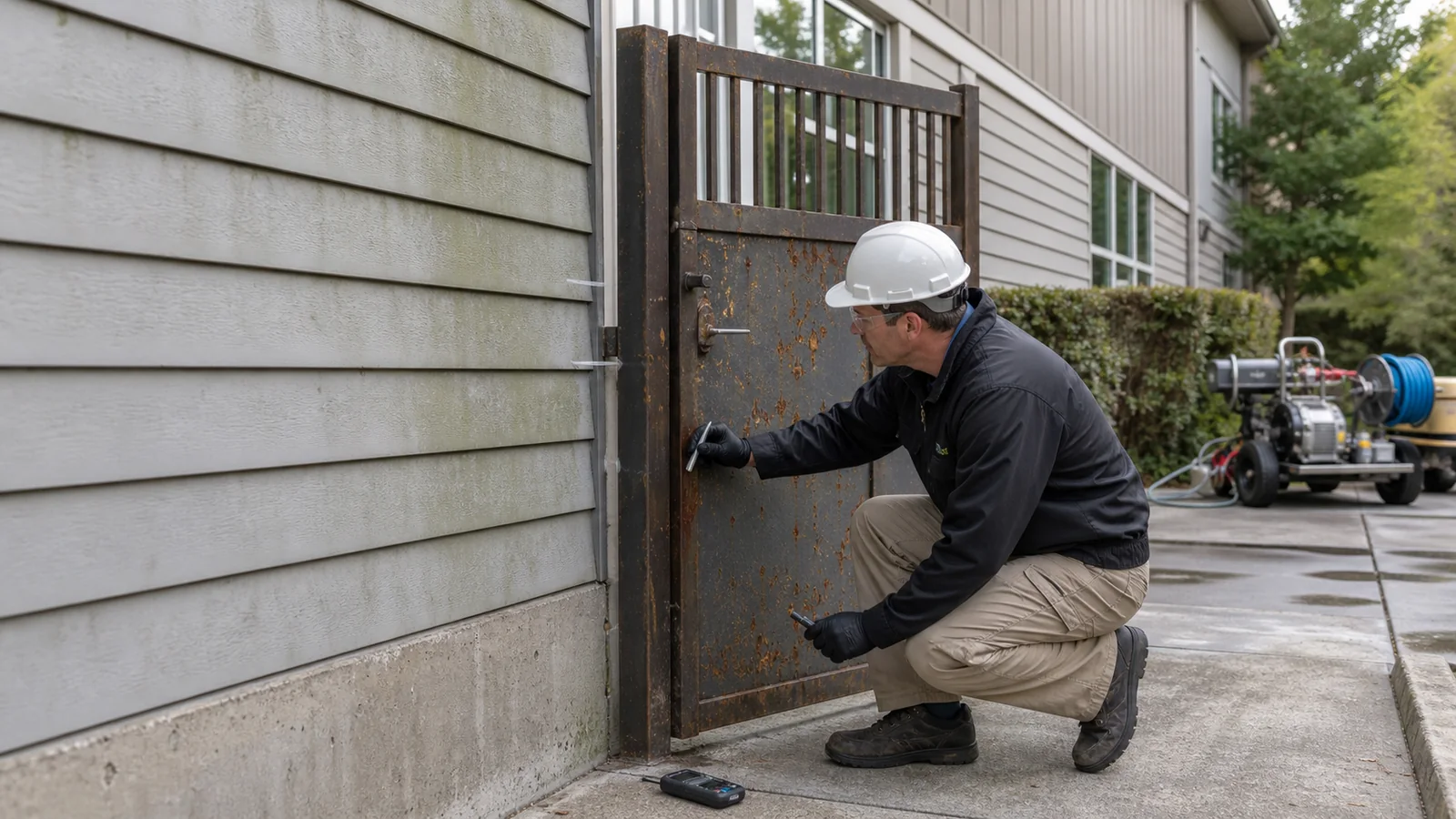
Soft washing, pressure washing, and abrasive blasting can all improve a surface, but they do different work. A process that safely removes algae from painted siding may barely affect corrosion on a trailer. A pressure washer that clears mud from sound concrete may scar wood, open masonry joints, or leave a failing coating behind. Blasting that efficiently removes paint from steel would be unnecessary for ordinary grime.
The practical choice starts with two questions: What must come off, and what must the surface be ready for afterward? Manases EcoBlast provides mobile surface preparation across Kansas, Oklahoma, and Texas from Great Bend and Austin. This guide explains where each method generally fits and when a test area or specialist assessment should come before a final decision.
First Decide Whether You Are Cleaning or Preparing
Cleaning removes surface contaminants such as dirt, mud, algae, mildew, and atmospheric grime. The objective is usually better appearance, sanitation, traction, or routine maintenance while preserving the existing paint, stain, or substrate. Soft washing and pressure washing occupy different parts of this category.
Surface preparation deliberately changes or removes an existing layer. The objective may be to strip rust, scale, paint, powder coating, or another failed finish and leave a defined condition for repair or recoating. Abrasive blasting is often considered here because media impact can reach textured steel, corners, and seams that are inefficient to sand by hand.
Do not use “clean” and “coating-ready” interchangeably. A surface can look clean while retaining weak paint, invisible salts, oil, or a profile unsuitable for the specified coating. Conversely, a freshly blasted surface is not a finished restoration. It still needs inspection, cleaning, drying, and timely protection under the coating manufacturer’s requirements.
What Soft Washing Does Best
Soft washing uses low-pressure application and cleaning chemistry to loosen or treat organic growth and grime, followed by a controlled rinse. It can fit siding, some painted exteriors, stucco, roofs, fences, and other surfaces when the substrate, coating, runoff plan, and chemical system are compatible. Treating the growth rather than relying on high force can provide a gentler result.
Soft washing is not one universal recipe. Concentration, dwell time, temperature, plant protection, rinse method, and compatibility all matter. Nearby landscaping, metals, glass, painted items, people, pets, and drainage paths may require protection. Roof access and manufacturer requirements add further constraints.
Choose a soft-wash assessment when:
- algae, mildew, or similar organic buildup is the main concern;
- the existing finish should remain in place;
- aggressive water pressure could damage the surface; and
- chemical use and runoff can be managed responsibly.
Soft washing generally does not remove established rust, mill scale, or thick paint. If refinishing requires those layers to come off, cleaning alone does not complete the preparation.
Where Pressure Washing Fits—and Where It Can Fail
Pressure washing relies primarily on water force. It is useful for mud, loose debris, and general dirt on suitable hard surfaces. Common applications include sound concrete, selected patios or pavers, and equipment pre-cleaning before inspection or a second process. Nozzle, pressure, flow, distance, angle, and dwell time must match the substrate.
More force is not automatically more effective. Aggressive technique can etch concrete, cut stripes or fuzz into wood, dislodge paver sand, damage mortar, drive water behind siding, and lift a coating that was meant to remain. It can also produce an uneven result when asked to strip paint or corrosion beyond its practical capability.
Pressure washing may be the sensible option when the material is robust, the contaminant is mostly dirt or mud, and no coating profile is required. It may also serve as a pre-cleaning step: oil, grease, soil, and packed debris should often be addressed before abrasive preparation. That does not mean pressure washing by itself creates the condition a primer specification requires.
When Abrasive Blasting Is the Better Preparation Tool
Abrasive blasting propels selected media to remove coatings, corrosion, scale, or contamination and create an agreed surface condition. Wet abrasive or “dustless” blasting introduces water into the process, reducing airborne dust compared with dry blasting. It is not dust-free, and it still produces rebound, water, coating debris, and spent abrasive that require controls and cleanup.
Blasting is commonly evaluated for steel trailers, equipment, structural components, industrial coatings, and some masonry or wood restoration projects. Suitability is surface-specific. Media, pressure, flow, nozzle distance, angle, and operator movement must be tuned to avoid excessive profile or substrate damage. Delicate wood, thin metal, unknown masonry, and mixed-material assemblies deserve conservative testing.
Blasting becomes a strong candidate when:
- rust, scale, failing paint, or a heavy coating must be removed;
- seams, welds, corners, or texture make hand tooling inefficient;
- the coating applicator can define the required cleanliness and profile; and
- containment, recovery, inspection, and recoating are already planned.
Unknown or older coatings may require testing before disturbance. Hazardous constituents change worker protection, containment, and waste handling; wet operation does not make those obligations disappear.
Use This Jobsite Decision Checklist
Before requesting a method, document the project rather than guessing from one close-up photo:
- Substrate: steel, aluminum, concrete, brick, wood, stucco, or painted siding.
- Material to remove: dirt, biological growth, oil, rust, paint, powder coat, stain, or scale.
- Desired endpoint: clean appearance, retained coating, bare substrate, spot repair, or coating-ready profile.
- Condition: cracks, deep corrosion, loose mortar, thin metal, rotten wood, or previous repairs.
- Sensitive areas: seals, bearings, electrical parts, glass, landscaping, air intakes, and adjacent vehicles.
- Site controls: access, water, drainage, wind, traffic, containment space, and disposal requirements.
- Next trade: inspector, welder, painter, or coating contractor, with a confirmed schedule.
A representative test area can verify removal rate and finish before the full scope. It should be approved by the party responsible for the final coating or restoration, not judged only by how quickly the old layer disappears.
Tricky Surfaces Require a Test, Not a Slogan
Wood can respond well to gentle cleaning when organic growth is the issue, yet stripping old stain or weathered fiber is a different objective. Excessive pressure can raise grain or gouge boards; overly aggressive abrasive settings can erode soft growth rings. Species, moisture, fasteners, desired appearance, and planned finish all influence the process.
Brick and masonry vary in hardness and condition. High-pressure water can damage mortar joints, while blasting can alter the face of softer brick or leave a texture that cannot be reversed. Graffiti, coatings, and mineral staining may each need different trials. Concrete likewise ranges from strong industrial slabs to decorative finishes where visible etching would be unacceptable.
Steel introduces another concern: once clean metal is exposed, oxidation can begin quickly. Humidity, temperature, surface contamination, and the coating system determine the available window. Preparation and primer should be treated as one coordinated workflow rather than two appointments separated by an open-ended delay.
Frequently Asked Questions
Can pressure washing remove rust before painting?
It may remove dirt and some loose material, but it generally does not provide consistent corrosion removal or a specified anchor profile. The coating applicator should define the required preparation; abrasive blasting or power tools may be needed.
Is dustless blasting safe for every surface?
No. Wet abrasive blasting reduces airborne dust compared with dry blasting, but media impact can still damage thin metal, soft wood, masonry, glass, and other delicate materials. Surface-specific settings and a test area matter.
Should a surface be washed before it is blasted?
Often, especially when mud, grease, oil, or soluble contamination is present. Blasting through those materials can spread contamination. The exact cleaning and verification sequence should follow the coating or project specification.
Which method is best for old paint?
It depends on the substrate, paint condition, removal endpoint, and coating composition. Loose paint on robust steel may suit blasting; paint that must remain should not. Unknown older coatings should be assessed before disturbance.
Get a Method Recommendation for Your Project
Send Manases EcoBlast two or three wide and close photos, the surface material, what must be removed, approximate dimensions, project ZIP code, and intended finish. If primer or paint is next, include the coating product or applicator’s preparation requirement. We can evaluate whether mobile abrasive blasting fits or whether a cleaning provider or another preparation method is more appropriate.
Call 512-592-1288 or email contact@manasesecoblast.com to discuss work in Kansas, Oklahoma, or Texas.
Suggested next reads: