
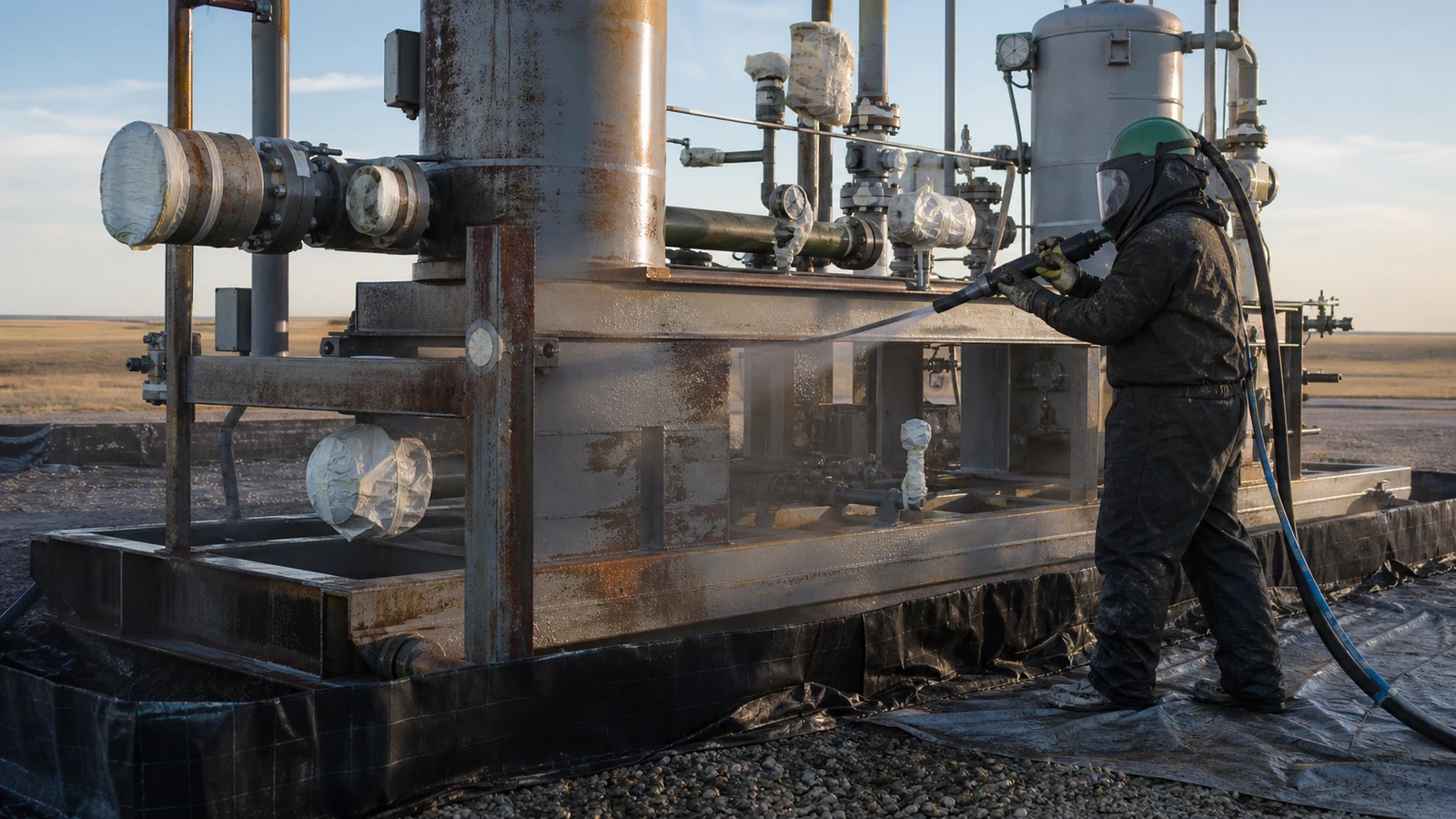
Oilfield equipment does not fail on a showroom schedule. Separator skids, pump bases, pipe supports, structural frames, tanks, trailers, and production equipment stay exposed to weather, vibration, chemicals, abrasion, and repeated maintenance. When coating begins to peel or corrosion spreads beneath it, the owner needs more than a cosmetic cleanup. The surface has to move through isolation, preparation, inspection, repair, and recoating without creating a new operational problem.
Mobile surface preparation can keep large assets at the lease, yard, fabrication shop, or maintenance facility. That advantage only becomes valuable when the project is scoped around the equipment and the next coating system. A useful plan identifies what is safe and accessible to prepare, what must be removed or protected, how debris and water will be controlled, who accepts the prepared surface, and how quickly primer can follow.
Start With the Asset and the Maintenance Objective
“Oilfield equipment” can describe very different projects. An exterior separator skid with broad structural steel is not the same as intricate valve piping, a tank interior, an operating pump package, or a component with unknown process residue. Begin by listing each asset and the reason it is being prepared.
Common candidates for project review include accessible exterior steel on:
- separator and heater-treater skids;
- pump bases, compressor frames, and structural supports;
- non-operating production equipment scheduled for maintenance;
- pipe racks, guards, stairs, handrails, and work platforms;
- trailers, tanks, and transportable field equipment;
- fabricated replacement components before coating.
For each asset, record dimensions, quantity, current location, access on all sides, coating condition, and desired return-to-service date. State whether the goal is complete coating removal, selective maintenance preparation, rust removal for inspection, weld-repair access, or a coating-ready finish.
The new coating should help define the work. Ask the coating supplier or project specification for acceptable preparation methods, required cleanliness, anchor-profile range, environmental limits, and the maximum interval before primer. Without those criteria, “blast to clean metal” leaves the owner, preparation crew, inspector, and painter using different definitions of done.
Confirm Shutdown, Isolation, and Site Control Before Mobilization
Surface preparation should not begin until the owner or controlling contractor has established that the equipment and work area are ready. Process isolation, depressurization, draining, purging, lockout or tagout, gas testing, and verification of safe work conditions belong with qualified site personnel under the facility’s procedures. A blasting contractor should receive a clearly released work area, not make assumptions about the operating state of oil and gas equipment.
Identify nearby ignition sources, electrical equipment, hot surfaces, vehicle traffic, overhead lines, excavations, and simultaneous operations. Abrasive blasting uses high-pressure equipment and can introduce impact, noise, visibility, and hose-management hazards. Residual hydrocarbons, combustible material, or an unsafe atmosphere can change whether the work is appropriate at all.
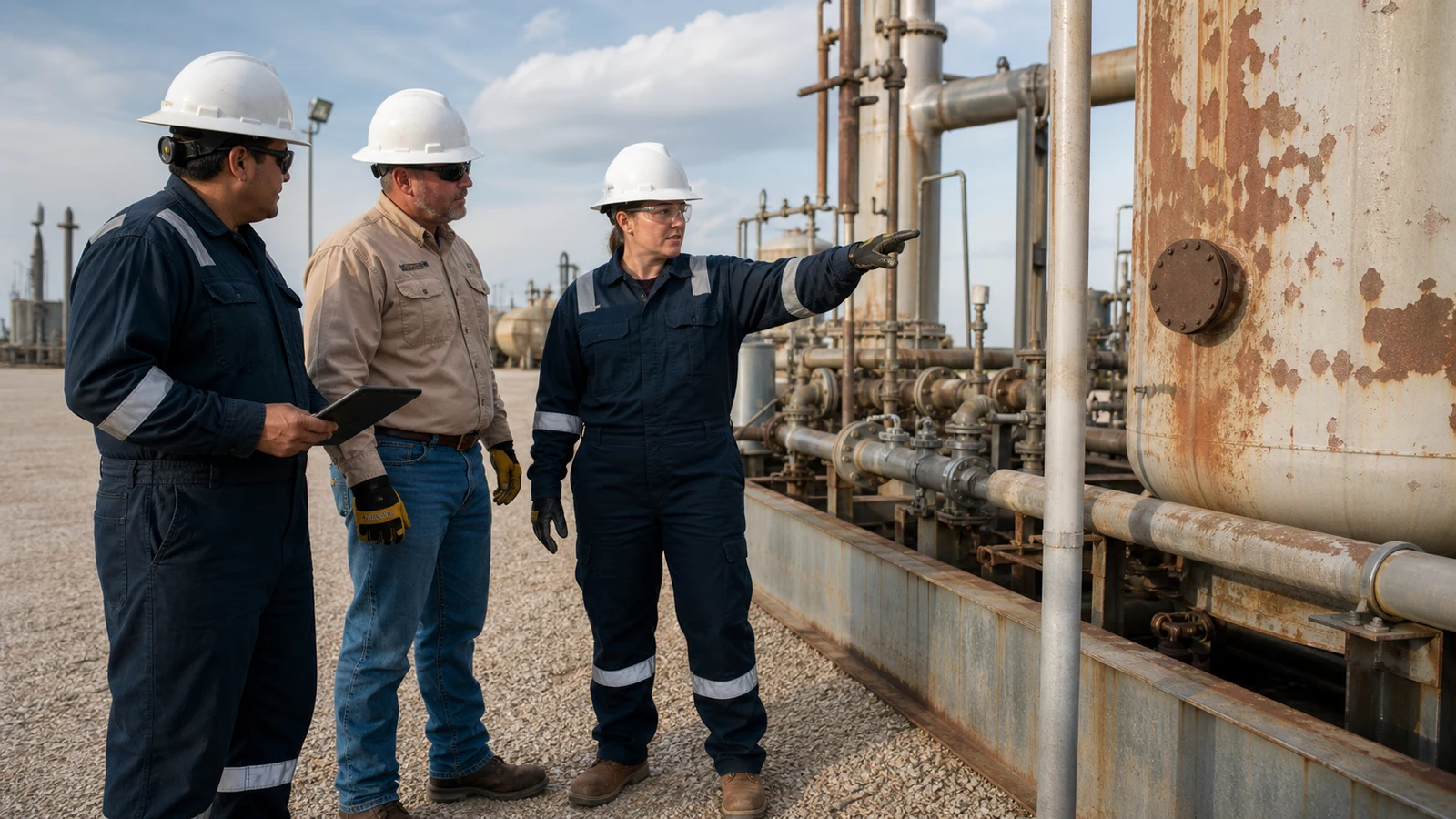
The pre-job walkdown should establish access boundaries, exclusion zones, emergency routes, equipment staging, and the authority to stop work if site conditions change. OSHA’s oil and gas resources note that drilling and servicing work can involve different regulatory requirements depending on the activity, while its abrasive-blasting guidance emphasizes job-specific hazard assessment. The operator’s procedures and the actual site conditions must govern the plan.
Clean the Equipment Before Judging the Coating
Oil, grease, paraffin, chemical residue, salts, soil, and process buildup can hide the steel and interfere with coating adhesion. Abrasive blasting is not a substitute for suitable degreasing or decontamination. Blasting over oily material can spread contamination across the surface and into abrasive debris.
The owner should identify known service history and residue concerns. Product records, maintenance records, and representative testing may be needed when existing coatings or contamination are unknown. Wet abrasive blasting can reduce airborne dust compared with dry blasting, but water does not neutralize hazardous coating ingredients or process residue. Slurry, spent abrasive, rust, and coating debris still require appropriate containment and disposition.
Cleaning often changes the scope. Once buildup is removed, the team may find pitting, cracked welds, coating failure around flanges, corrosion beneath clamps, or sound coating that can remain under an approved maintenance system. Photograph the cleaned condition and agree on repairs or exclusions before production preparation starts.
Protect Gauges, Valves, Seals, and Process Openings
Oilfield assemblies combine blastable structural steel with components that should not receive abrasive, moisture, or impact. Gauges, transmitters, valve stems, seals, bearings, instrument tubing, electrical boxes, vents, polished surfaces, threaded connections, elastomers, identification plates, and open process connections may require removal, engineered protection, or exclusion from the scope.
Masking must match the process and duration. A loose plastic bag is not a protection plan for a precision component. The owner’s mechanic, electrician, or instrument technician should identify what can remain, what must be disconnected, and how the asset will be inspected before returning to service.
Geometry also affects production. Tight pipe clusters, back-to-back angles, clamp contact points, underside steel, and overlapping plates can be difficult to reach and inspect. Mark inaccessible areas during the walkdown rather than discovering them after the crew and coating window are committed.
Use a Representative Test Area to Set Expectations
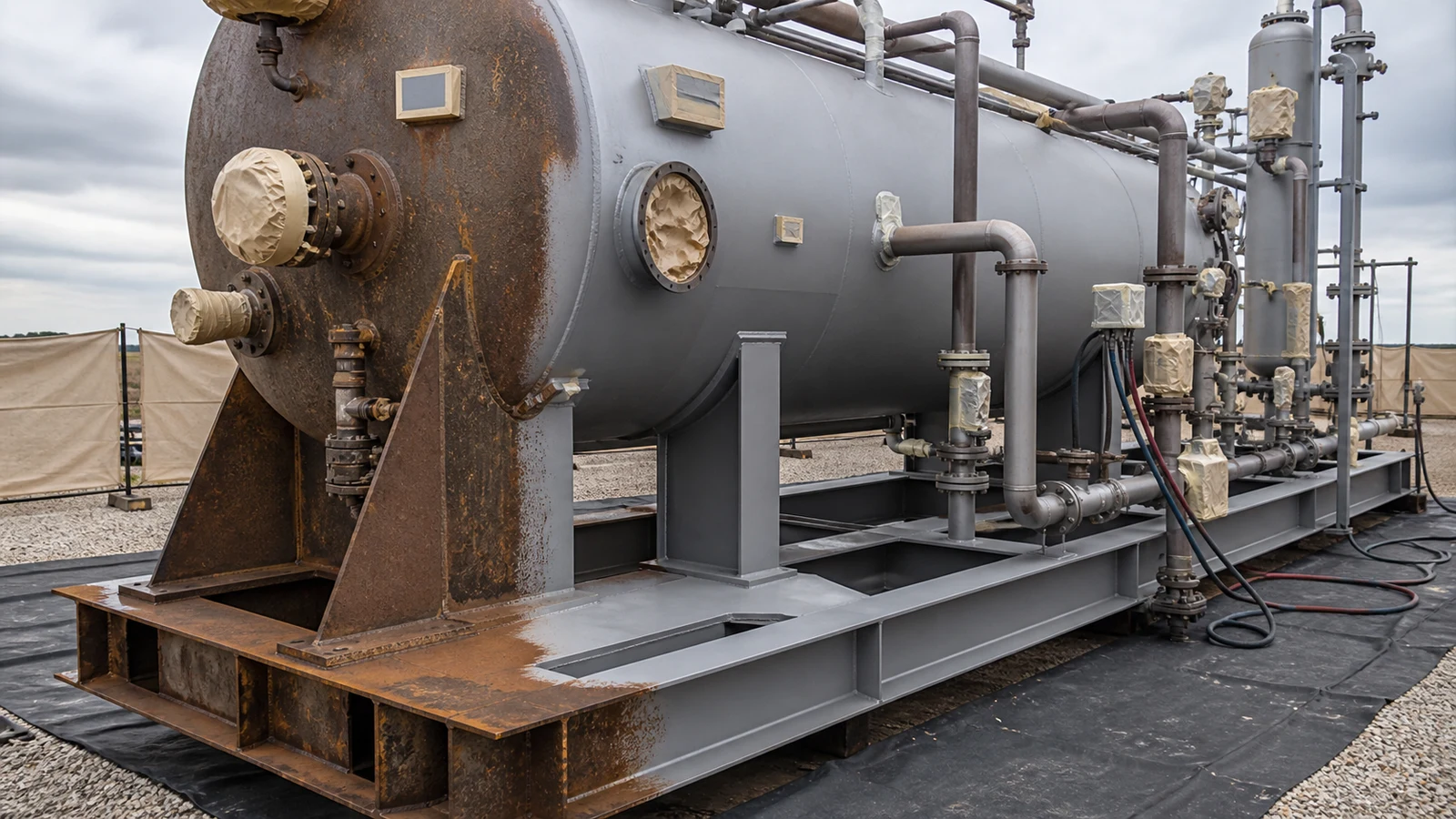
A test area can answer practical questions before the full job begins. Select a location with typical coating thickness, corrosion, welds, edges, and access—not the easiest flat panel. The preparation contractor can adjust media, water, pressure, angle, nozzle distance, and travel speed while the owner or inspector evaluates the result.
The accepted test area should establish:
- what coating and corrosion must be removed;
- whether sound existing coating may remain;
- the visual cleanliness and surface profile required;
- treatment of pits, welds, sharp edges, and difficult geometry;
- acceptable flash rust when wet preparation is used;
- the inspection method and person responsible for acceptance.
AMPP publishes recognized surface-preparation standards used throughout protective-coating work. The project specification should identify the standard and version that applies instead of relying on informal terms. The coating manufacturer’s product data should also guide profile, environmental limits, and primer timing.
Plan Containment Around the Lease or Facility
Mobile blasting avoids moving oversized equipment, but it brings the work zone to an operating property. Plan where water, mist, abrasive, coating chips, and rust will go before the first hose is unrolled. Protect stormwater paths, soil, nearby equipment, air intakes, vehicles, buildings, and adjacent work crews.
Depending on the coating, residue, and site, controls may include ground covers, berms, portable screens, drain protection, collection containers, vacuum recovery, and a documented cleanup route. Wind can carry mist and light debris beyond the immediate work zone. Rain can overwhelm containment, while temperature and humidity can affect both the steel and the coating schedule.
Wet abrasive blasting lowers dust emissions compared with traditional dry blasting, but it is not “dust free” and does not remove the need for PPE, exclusion zones, or debris control. OSHA identifies coating material, substrate, abrasive, high-pressure equipment, noise, and surrounding workers as factors in abrasive-blasting hazard planning.
Build Repair and Inspection Hold Points Into the Schedule
Coating removal may reveal pitting, thinned steel, cracked welds, previous patches, damaged supports, and corrosion around connections. Blasting exposes the condition; it does not decide whether the equipment remains fit for service. The owner, engineer, inspector, or qualified repair professional must make that determination.
Create a hold point after initial removal so the responsible party can inspect the substrate. Complete welding, grinding, edge treatment, and component replacement before final preparation. Repair work performed after acceptance can burn coating edges, create spatter, alter profile, and contaminate nearby steel.
For multiple assets, sequence the job in manageable sections. One skid can move through cleaning, preparation, inspection, repair, and primer while the next is being released. This reduces the amount of bare steel exposed to weather and makes downtime easier to coordinate with operations.
Connect Preparation Directly to Primer and Recoating
Prepared steel is a temporary condition, not a finished product. Moisture, condensation, handling, airborne contamination, and nearby work can quickly make an accepted surface unsuitable for coating. Wet preparation also requires a plan for drying and evaluating flash rust against the coating system.
Before mobilization, confirm who supplies primer, who applies it, who monitors environmental conditions, and who can accept or reject the surface. Define what happens if weather, repairs, or inspection delays the coating crew. If an inhibitor is proposed, confirm compatibility with the specified coating rather than assuming it is acceptable.
The fastest blasting schedule is not always the fastest maintenance schedule. Production should match the rate at which the owner can inspect, repair, and coat completed sections. A coordinated handoff prevents crews from preparing more steel than the next trade can protect.
Send a Bid-Ready Oilfield Equipment Scope
A detailed first request helps a contractor determine whether the project fits, what must be clarified, and whether a site visit or test area should come next. Include:
- project address or ZIP code and site contact;
- asset type, quantity, dimensions, and representative photos;
- full-equipment views plus close-ups of coating failure, rust, welds, and tight access;
- current operating status and the owner’s release or isolation plan;
- known coating age, type, testing, and contamination history;
- components to remove, mask, protect, or exclude;
- required surface standard, profile, and intended coating system;
- inspection, repair, primer, and coating responsibilities;
- access hours, shutdown window, weather constraints, and return-to-service date;
- site rules, staging area, utilities, containment, and cleanup expectations.
Sending wide shots and close-ups is usually more useful than sending dozens of nearly identical images. Add a drawing, equipment list, or marked-up photograph when the scope includes only selected areas. For related planning, review industrial coating removal, rust removal for heavy equipment, and surface preparation before paint.
Frequently Asked Questions
Can oilfield equipment be blasted while it is operating?
The preparation contractor should receive equipment and a work area released as safe under the owner’s procedures. Operating status, process isolation, residual material, ignition sources, and simultaneous work require site-specific review by qualified personnel. Do not assume that exterior access alone makes active equipment appropriate for blasting.
Does every component need to be taken apart?
Not always. The answer depends on the included surfaces, geometry, sensitive components, and acceptance criteria. Owner-designated mechanics or instrument personnel should decide what is removed, protected, or excluded before work begins.
Will wet blasting prevent all dust and cleanup?
No. Wet abrasive blasting can substantially reduce airborne dust compared with dry blasting, but it still creates mist, spent abrasive, coating debris, rust, and water that must be controlled and cleaned up.
Can blasting repair pitted or thinned steel?
No. Blasting removes corrosion products and exposes the substrate. The owner or qualified professional must evaluate metal loss and decide whether repair, replacement, or another response is required.
How quickly should primer follow surface preparation?
As required by the coating system and before rusting or contamination makes the surface unacceptable. Weather, surface temperature, humidity, preparation method, inspection timing, and product requirements determine the usable window.
Request an Oilfield Equipment Project Review
Manases EcoBlast provides mobile wet abrasive blasting and surface preparation from Great Bend and Austin for qualified commercial and industrial projects across Kansas, Oklahoma, and Texas. Send equipment photos, the project ZIP code, approximate dimensions, coating condition, operating status, finish requirement, and timeline to contact@manasesecoblast.com or call 512-592-1288.
For the fastest review, include one wide photo of each asset, close-ups of representative coating failure, the areas that must be protected, and the coating or inspection requirement the prepared surface needs to meet.