
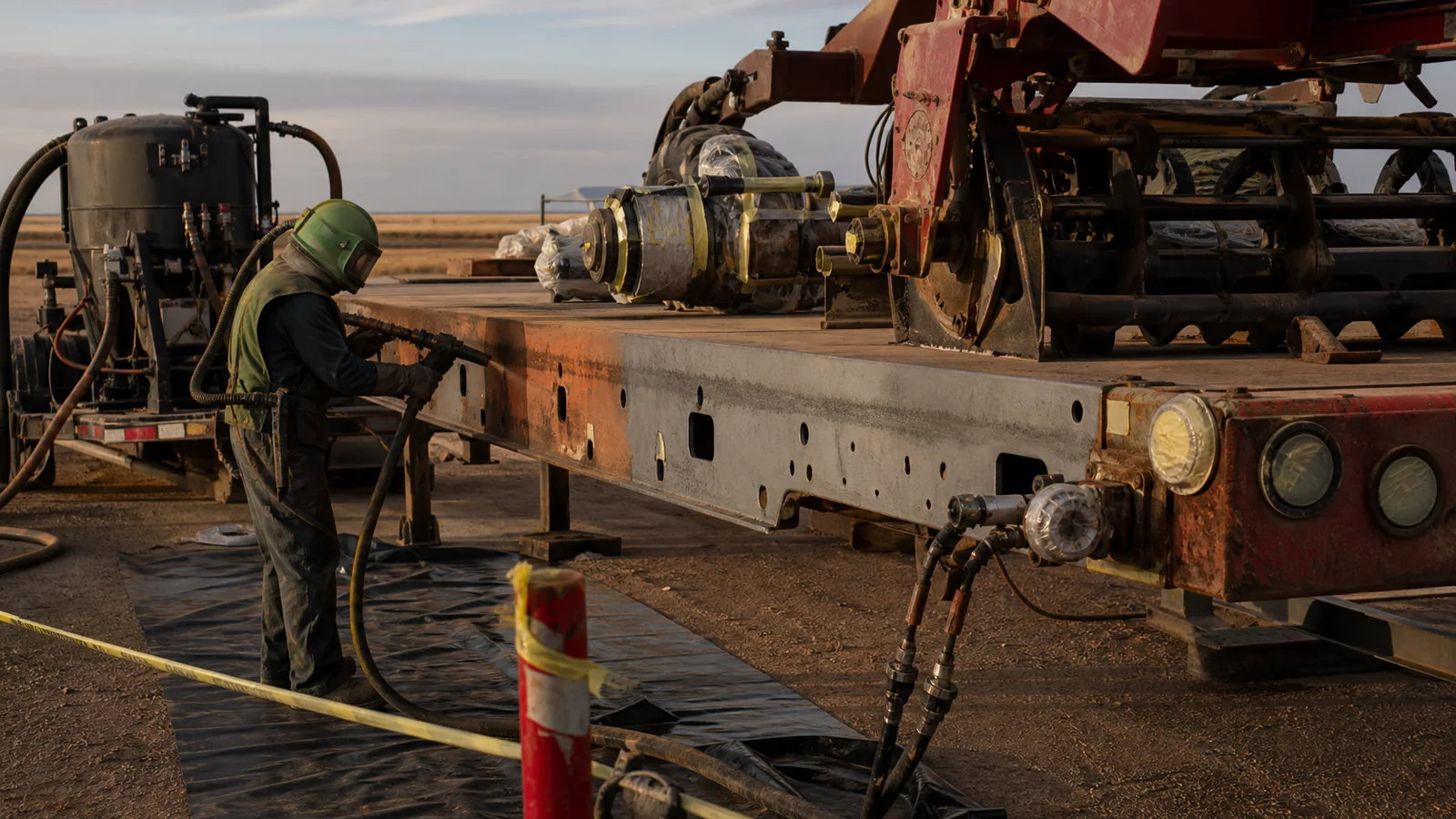
Rust on working equipment is more than an appearance problem. It can hide cracks, thinning, failed welds, loose scale, and coating edges that complicate inspection and repair. Before a welder, mechanic, or coating crew can make sound decisions, the steel often needs to be cleaned to an agreed condition.
Manases EcoBlast provides mobile wet abrasive blasting and surface preparation for commercial teams in Kansas, Oklahoma, and Texas, with operating bases in Great Bend and Austin. The objective is not simply to make steel look cleaner. It is to prepare the right areas, to the right level, in a sequence that supports repair, inspection, and recoating.
Where mobile rust removal fits
Mobile preparation is useful when moving an asset is costly or impractical. Typical candidates include equipment frames, agricultural implements, dump bodies, flatbeds, utility trailers, tanks or structural components approved for abrasive work, and fabricated industrial steel. It can also help expose defined areas around suspected defects before nondestructive examination or welding.
The intended next step drives the work. A repair crew may need localized removal around a crack or weld seam. A painter may need broad removal of corrosion, chalked paint, and poorly bonded coating. An estimator may initially need only a test area to learn what lies beneath several coating layers.
Not every surface should be blasted. Thin sheet, precision fits, hydraulic rods, bearings, seals, glass, wiring, data plates, and machined surfaces require protection or exclusion. Equipment owners should identify sensitive components and any areas that cannot tolerate moisture or abrasive intrusion during the pre-job walk.
Start with the steel, coating, and corrosion condition
A useful scope distinguishes among light surface rust, tightly bonded mill scale, layered coating, loose scale, and deep pitting. Geometry matters too: open plate is different from lattice, hinges, boxed sections, seams, and crowded hydraulic assemblies. Those differences affect access, production rate, masking, abrasive recovery, and the surface condition that can be achieved.
Existing coating history should be shared when available. Unknown or older coatings may require testing before disturbance. The owner or controlling contractor remains central to identifying hazardous materials and communicating site-specific requirements. If testing changes the handling or containment plan, that needs to happen before mobilization—not after production begins.
Photos are helpful for preliminary planning, but they should show context as well as close-ups. Include the full asset, representative corrosion, tight access, the underside, nearby operations, and the route a service vehicle would use.
Define the handoff before blasting begins
“Remove the rust” is not a complete acceptance criterion. Commercial teams should agree on what the next trade needs. Key questions include:
- Is the work for inspection, welding, full recoating, or spot repair?
- Must all existing coating be removed, or only loose and failed material?
- Are pits expected to become clean even though blasting cannot restore lost metal?
- Is a written coating specification or visual cleanliness standard controlling the job?
- Who accepts the prepared surface, and when will that inspection occur?
- How quickly must primer or another protective step follow preparation?
Abrasive blasting reveals steel; it does not repair section loss, correct pitting, or certify structural integrity. Newly visible defects should be routed to the qualified repair or inspection party. Likewise, the coating manufacturer or project specification should establish the required cleanliness, profile, soluble-salt controls, and timing for coating.
Sequence repair, cleaning, and recoating
Good sequencing prevents one trade from undoing another’s work. Heavy grease, packed soil, crop residue, and thick petroleum contamination generally need suitable pre-cleaning. Blasting should not be used to drive oil into a surface. Components scheduled for removal may be better removed first, while parts needed to move or safely support the asset may need to remain until later.
For repair work, one common sequence is targeted preparation, inspection, repair, cleanup, then final coating preparation. Another is broad stripping followed by repair and a final touch-up blast. The right choice depends on weld locations, contamination introduced by repair, and the coating system.
Freshly prepared carbon steel can flash rust, particularly with moisture, humidity, or weather exposure. Wet abrasive blasting reduces airborne dust compared with dry blasting, but it is not dust-free and it does not eliminate the need to plan runoff, spent abrasive, weather, and prompt handoff. The blaster and coating crew should coordinate production sections that can be inspected and protected within the available window.
Plan the work zone around an operating yard
A mobile setup needs more than space beside the machine. Planning should account for service-vehicle access, hose routes, stable equipment positioning, water and abrasive management, overspray or rebound, prevailing wind, drainage, and separation from employees and the public. Nearby vehicles, painted assets, air intakes, open doors, and sensitive production processes may need relocation or protection.
Containment and recovery expectations vary by substrate, coating, site, and local requirements. Establish who provides barricades, traffic control, lockout/tagout coordination, wash-water controls, and waste containers. Wet methods suppress much of the airborne dust at the nozzle, but controlled access and appropriate personal protection still matter.
For fleets or multiple implements, stage similar assets and identify them consistently. A clear release list prevents the wrong unit from being disabled and lets operations keep unaffected equipment working.
Estimate from access and acceptance—not square footage alone
Surface area helps, but it does not tell the whole story. A smooth trailer side and a corroded undercarriage can have similar nominal area and very different labor. Estimating inputs should include coating type and thickness, rust severity, steel thickness, geometry, access, masking, containment, final condition, and the number of mobilizations.
A test patch can answer high-value questions: how the coating releases, whether pitting is deeper than expected, what production rate is realistic, and whether the proposed process produces the handoff the repair or coating crew expects. Mark the test location and have the decision-maker review it. That sample then becomes a practical reference for the wider scope.
Frequently asked questions
Can blasting repair rust pits?
No. It can remove corrosion products and expose the pit, but it cannot replace lost steel. A qualified party should evaluate significant section loss.
Does wet abrasive blasting eliminate dust?
No. It reduces airborne dust compared with dry abrasive blasting, but work-zone controls, PPE, masking, and cleanup are still required.
Can equipment be coated immediately afterward?
That depends on the specified coating system, achieved surface condition, weather, and inspection. Coordinate the handoff with the coating manufacturer’s requirements and the applicator.
Do you need to see the equipment before pricing?
Detailed photos can support an initial scope. Complex assets, unknown coatings, restricted sites, or large programs may warrant a site walk or test area.
Coordinate your equipment-preparation window
For a practical scope, send Manases EcoBlast photos or plans, the project ZIP code, asset dimensions or quantity, and the repair or coating timeline. Include the expected handoff standard and any coating information available. Call 512-592-1288 or email contact@manasesecoblast.com to discuss mobile work in Kansas, Oklahoma, or Texas.
Suggested next reads: