
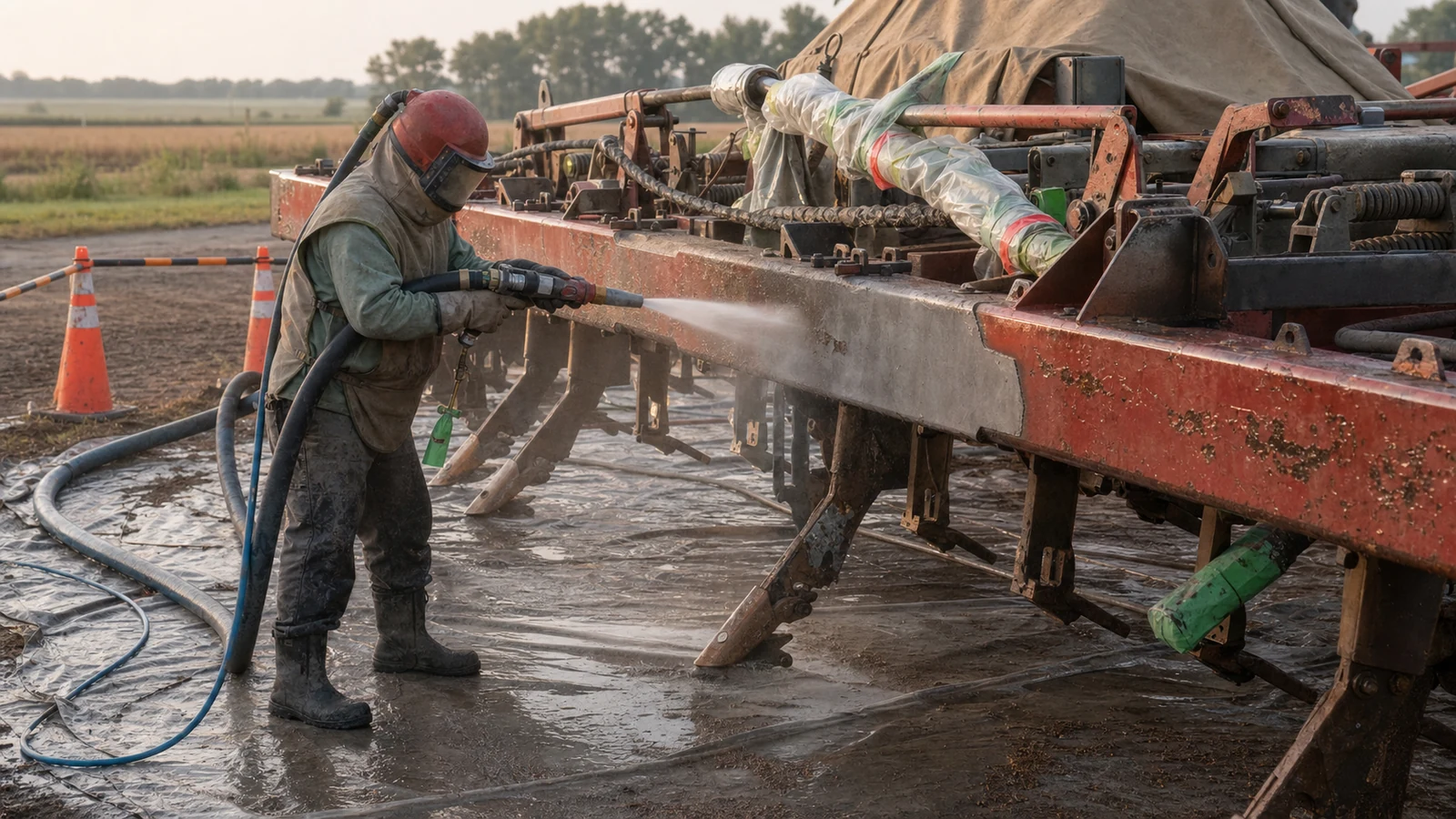
Agricultural equipment rarely reaches the paint stage as a simple cosmetic project. A cultivator, grain cart, trailer, attachment, or other steel implement may carry layers of soil, grease, fertilizer residue, faded paint, corrosion, weld repairs, and hard-to-reach joints. If those conditions are not addressed in the right order, a new coating can hide defects without creating a durable maintenance result.
Surface preparation connects the equipment’s current condition to its next repair and coating system. The work should be scoped around the asset, the finish goal, and the time available before it returns to service—not around a generic promise to “blast and paint.”
Start With the Equipment’s Next Job
Before choosing a preparation method, define why the asset is being restored. The requirements for an implement receiving a practical maintenance coating can differ from those for a highly visible trailer or a fabricated component returning to a manufacturer’s coating system.
Record the equipment type, dimensions, current location, operating schedule, and desired completion date. Photograph the full asset and representative close-ups of rust, peeling coating, welds, fasteners, seams, and areas that collect material. Note whether the equipment can be folded, raised, rotated, or safely supported to expose hidden surfaces.
The scope should also identify what happens after preparation. Will the owner inspect the bare steel? Is a welder scheduled? Who supplies and applies primer? Does the coating manufacturer require a particular cleanliness or surface profile? Working backward from those decisions reduces idle time and prevents a prepared surface from waiting outdoors while the next trade is still being arranged.
Clean Before Evaluating Rust and Coating Failure
Soil and crop residue can conceal corrosion and hold moisture against steel. Oil and grease can interfere with abrasive work and coating adhesion. Fertilizer and chemical residue may require additional handling and cleaning decisions. Remove loose material and address contaminants with a process suitable for the equipment and site before evaluating the coating.
Cleaning often changes the apparent scope. A stained surface may prove sound, while a heavy buildup may reveal deep pitting, a cracked weld, or coating failure spreading from a seam. Document those findings before production preparation begins.
Unknown coatings and residues should not be disturbed by assumption. Equipment history, prior repairs, and available product records can help the owner determine whether testing or special controls are needed. Wet abrasive blasting suppresses much of the airborne dust associated with dry blasting, but it does not make hazardous coating constituents or contaminated debris harmless.
Separate Sensitive Components From Blastable Steel
Agricultural machinery combines durable structural steel with parts that should not receive abrasive impact or water intrusion. Bearings, seals, hydraulic cylinders, polished rods, hoses, wiring, connectors, sensors, chains, sprockets, gearboxes, tires, labels, lights, and machined surfaces may need removal, shielding, or a defined exclusion zone.
Masking is not a substitute for understanding how the machine is assembled. The owner or qualified mechanic should identify lubrication points, drain paths, adjustment mechanisms, and components that may trap water or abrasive. Any disassembly should be assigned before the blasting crew arrives, and removed parts should be labeled and stored for reinstallation.
Thin sheet metal, fiberglass, aluminum, cast components, and rubberized parts also respond differently from heavy steel. A representative test area helps confirm that the selected media, pressure, nozzle distance, angle, and travel speed remove the unwanted material without distorting or unnecessarily roughening the substrate.
Use the Coating System to Define the Prepared Surface
“Clean metal” is not a complete acceptance standard. A coating system may require removal of loose and tightly adhered material, a defined visual cleanliness level, or an anchor-profile range. Edges, welds, pits, and inaccessible geometry can need additional treatment even when broad flat sections look uniform.
Ask the primer or coating supplier for the applicable product data and preparation requirements. Confirm:
- which old coating may remain, if any;
- the required surface cleanliness and profile;
- treatment of rust pits, sharp edges, weld spatter, and repairs;
- acceptable flash rust, if wet preparation is used;
- environmental limits and the time allowed before priming;
- inspection responsibility and the point at which the surface is accepted.
A small approved test section can align the owner, preparation contractor, repair team, and painter. Choose an area with typical coating buildup and corrosion rather than the easiest flat panel. Record the process and use the accepted result as a field reference.
Plan Repairs as a Hold Point
Removing rust and failed paint can expose damage that was not visible during the initial walkaround. Pitting, thinned steel, cracked welds, bent brackets, and previous patches may require evaluation before coating. Abrasive blasting reveals these conditions; it does not determine whether a component remains fit for service.
Build an inspection hold point into the schedule after initial removal. The owner, mechanic, fabricator, or other responsible party can then decide which repairs are necessary. Welding and grinding should be completed before final preparation because repair work can burn coating edges, create spatter, and contaminate nearby surfaces.
On complex implements, divide the work into logical sections. This allows completed repairs to move through final preparation and primer without holding the entire asset in a bare condition. It also makes it easier to track inaccessible areas and confirm that pins, joints, and overlapping assemblies receive the treatment specified for them.
Control the Farm-Yard Work Zone
Mobile preparation avoids transporting oversized equipment, but it still requires a controlled work area. Choose a stable surface with room for the asset, compressor and blasting equipment, hoses, abrasive handling, containment, and safe movement around folded or raised components.
Protect nearby vehicles, buildings, stored products, livestock areas, crops, air intakes, drainage paths, and occupied work zones. Plan for wind, overspray, noise, water, spent abrasive, coating debris, and the route used for cleanup. Ground covers, screens, drain protection, berms, or recovery equipment may be appropriate depending on the site and materials being removed.
Keep normal farm traffic out of the work zone. Hoses should be routed to reduce trip and vehicle hazards, and emergency access should remain open. Weather triggers matter across Kansas, Oklahoma, and Texas: wind can move mist and debris beyond controls, while rain, humidity, and temperature can affect both preparation and coating timing.
Coordinate Preparation, Inspection, and Primer
Freshly prepared steel should not be treated as durable outdoor storage. Moisture and contamination can quickly change its condition. Wet preparation introduces a particular need to plan drying and evaluate flash rust against the coating system’s requirements.
Schedule sections that can be prepared, inspected, and primed within an acceptable window. Confirm who monitors environmental conditions, who approves the surface, and what happens if weather or a repair delays coating. Protect accepted areas from soil, grease, fingerprints, traffic, and nearby grinding.
The best production rate is the one the full maintenance sequence can support. Preparing the entire implement quickly does not help if the repair or painting crew can only accept a small portion before conditions change.
Build a Bid-Ready Agricultural Equipment Scope
A useful request for review includes:
- equipment type, quantity, location, and current operating status;
- overall and folded dimensions, weight, and access around the asset;
- photos of the full machine and close-ups of representative failures;
- known coating, repair, and contamination history;
- components the owner will remove or protect;
- areas included and excluded from preparation;
- desired coating system and required prepared-surface condition;
- inspection, repair, primer, and reassembly responsibilities;
- site access, utilities, containment needs, and cleanup expectations;
- seasonal deadline and available downtime.
These details let contractors evaluate production access and handoff requirements instead of pricing from one distant photograph. For broader planning guidance, review rust removal for heavy equipment, off-season restoration planning, and surface preparation before paint.
Frequently Asked Questions
Can farm equipment be blasted without taking it completely apart?
Sometimes, but the answer depends on the machine and the areas included. Sensitive components and overlapping assemblies may need removal, shielding, or exclusion. The owner or mechanic should approve the disassembly and protection plan.
Is wet abrasive blasting appropriate for every agricultural component?
No. Substrate thickness, material, geometry, coating, corrosion, and nearby components all matter. A test area and equipment-specific review should guide the method and settings.
Will blasting repair deep rust pits?
No. Blasting removes corrosion products and exposes the underlying surface. The responsible owner or repair professional must decide whether pitted or thinned material can remain, needs repair, or should be replaced.
When should primer be applied?
After the surface is accepted and as required by the coating system, before rusting or contamination makes it unacceptable. Weather, preparation method, and product requirements determine the workable window.
Scope Agricultural Equipment Preparation
Manases EcoBlast provides mobile wet abrasive blasting and surface preparation from Great Bend and Austin for qualified commercial and agricultural projects across Kansas, Oklahoma, and Texas. Send equipment photos, the project ZIP code, approximate dimensions, coating condition, sensitive-component concerns, finish goal, and timeline to contact@manasesecoblast.com or call 512-592-1288.